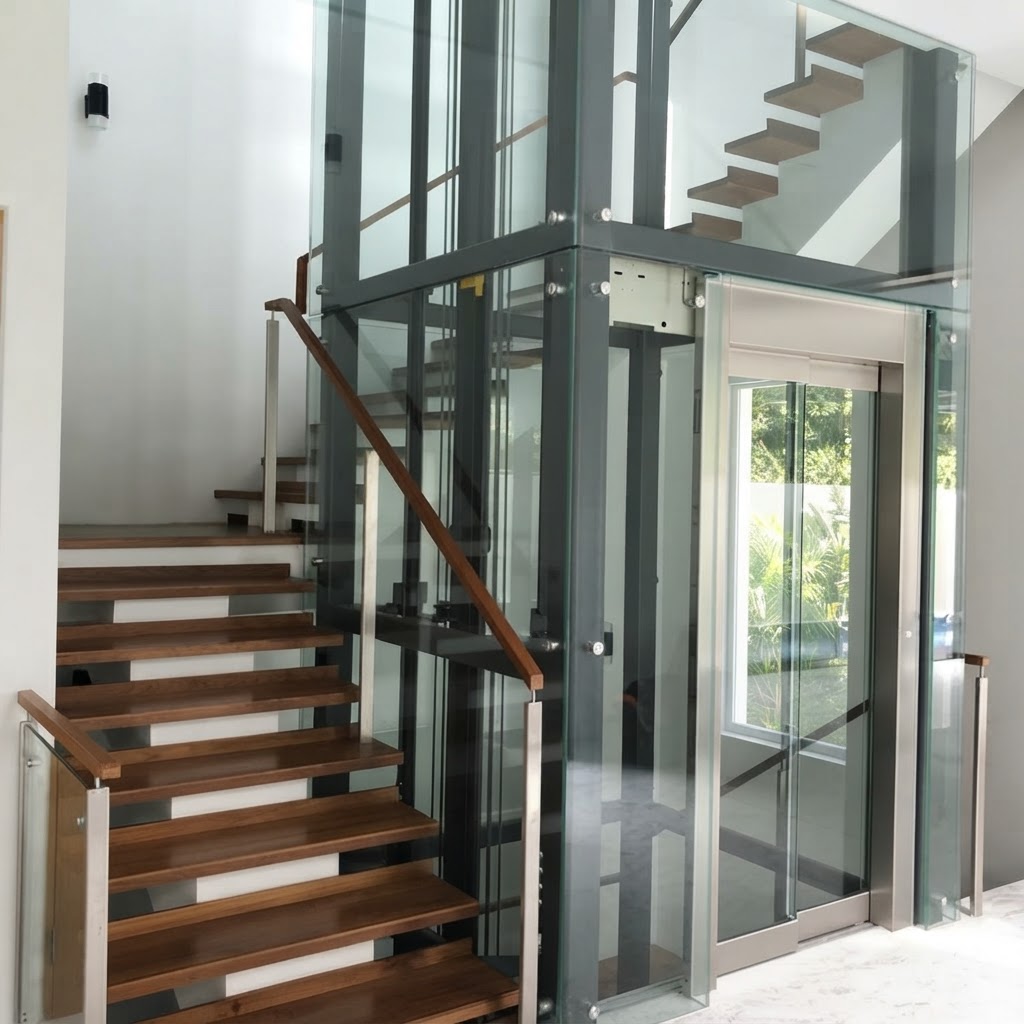
عزّنا بطبعنا.. وخيرنا يجمعنا!
بمناسبة اليوم الوطني المجيد، نرفع أسمى آيات التهاني للوطن وشعبه الكريم ✨
ولأنكم تستحقون الأفضل، شاركونا الاحتفال مع أقوى عروضنا على المصاعد:
💰 سعر المصعد عليك.. والضريبة بالكامل علينا!
🗓️ العرض ساري حتى 30 سبتمبر 2026
ارتقِ ببيتك بأعلى معايير الأمان والتصميم العصرِي، واستغل الفرصة قبل نهاية الشهر!

Elevator Engineering Technology
How Triennium Lift designs vertical mobility systems that are safe, efficient, and built for the full life of the building.
Triennium Lift engineers advanced vertical mobility systems for residential, commercial, medical, freight and industrial applications across more than forty export markets. Every elevator begins with a configured traction or hydraulic drive matched to the building's traffic profile, shaft geometry, and headroom constraints, then is refined through sixteen years of manufacturing experience inside an 80,000-square-metre facility capable of twenty thousand units per year. The result is a lift that is quiet, dependable, and energy-aware from the lobby to the top landing.
The core of each system is a gearless permanent-magnet synchronous motor paired with a variable-voltage, variable-frequency drive. Because the drive regenerates power during braking and returns it to the building grid, a Triennium traction elevator can cut energy consumption by up to forty percent compared with a conventional geared unit. Machine-room-less architectures house the motor directly inside the hoistway, recovering usable floor area for the developer without sacrificing performance or service access. Destination dispatch controllers group passengers by floor and call pattern, shortening wait times and reducing crowding during the morning and evening peaks in office towers.
Safety is engineered in layers rather than added at the end. Redundant brakes, overspeed governors, seismic sensors, and EN 81-20/50-compliant buffers work together to protect passengers under every foreseeable fault, while ASME A17.1 options extend compliance for North American projects. Cloud connected controllers stream fault codes, usage telemetry, and maintenance windows to Triennium service teams, enabling predictive care that keeps downtime low across the lifecycle. Ride quality is tuned through precision leveling, vibration-damped suspension, and adaptive speed profiling, so the start-to-stop journey meets the comfort thresholds expected in premium hotels, hospitals, and mixed-use developments. Together these technologies define what Triennium means by engineering the new axis of ascent.
Four Generations of Drive Technology
The lift motor has evolved from oil-lubricated geared machines to silent, energy-returning permanent-magnet drives. Understanding this progression is key to trusting the systems we install today.
Geared AC Traction
Worm-gear reduction boxes coupled to induction motors. Robust and cheap, but loud, oil-hungry, and limited to ~1.0 m/s with efficiency around 55%.
Gearless VVVF Drive
Direct-drive gearless machines with variable-voltage, variable-frequency inverters. Quieter, faster (up to 2.5 m/s), and ~15% more efficient than geared units.
PMSM + Machine-Room-Less
Permanent-magnet synchronous motors mounted inside the hoistway. Eliminates the machine room, lifts efficiency to ~70%, and enables speeds to 4.0 m/s for mid-rise towers.
Regenerative + IoT Control
Braking energy returned to the building grid, cloud-connected controllers for predictive maintenance, and destination dispatch — cutting net energy use by up to 40%.
Inside an Elevator System
Every Triennium lift is assembled from eight engineered subsystems, each certified and individually tested before commissioning.
Traction Machine
Permanent-magnet synchronous motor with sealed bearings and integrated brake. Mounted in the hoistway — no machine room required.
VVVF Drive
Variable-voltage variable-frequency inverter governs torque and speed, producing smooth starts/stops and feeding regenerative power back to the grid.
Controller
Microprocessor controller coordinates calls, door logic, and safety monitoring via a redundant CAN-bus network — flash-upgradable over the air.
Speed Governor
Mechanical centrifugal governor continuously senses cabin speed and trips the safety gear the instant rated speed is exceeded.
Safety Gear
EN 81-20/50-compliant progressive buffers and safety brakes arrest the cabin in a controlled deceleration under any fault or free-fall condition.
Steel Ropes
High-tensile steel suspension ropes on a deflector sheave, sized with a 12× safety factor and tension-monitored for wear over the lifecycle.
Door System
Gearless door operator with multi-beam infrared light curtain detects any obstruction in the threshold and reopens instantly.
Guide Rails
Precision-machined T-guide rails with sliding roller guides ensure cabin stability, leveling accuracy within ±5 mm at every landing.
Six Pillars of the System
Machine-Room-Less Drives
Gearless permanent-magnet synchronous motors housed inside the hoistway, eliminating the machine room to reclaim valuable building footprint while delivering quieter, more efficient traction.
Regenerative Energy
Regenerative drives feed braking energy back into the building grid, cutting energy consumption by up to 40% and lowering lifetime operating cost for high-traffic installations.
Smart Destination Control
Microprocessor-based destination dispatch groups passengers by floor and call pattern, reducing average wait times and ride crowding during peak demand in office towers.
Multi-Layer Safety
Redundant brakes, overspeed governors, seismic sensors and EN 81-20/50-compliant buffers form a layered safety architecture that protects passengers under every fault condition.
Ride Quality Engineering
Precision leveling, vibration-damped suspension and adaptive speed profiling deliver a start-to-stop ride that meets the comfort thresholds demanded by premium developments.
Integrated Monitoring
Cloud-connected controllers stream fault codes, usage telemetry and maintenance windows to Triennium service teams for predictive, low-downtime lifecycle care.
Specify a system for your project
Configure drive type, capacity, speed and finish — then request an engineering review from the Triennium team.
Request a Quote